Root Canals


If your dentist recommends root canal therapy, it’s understandable to feel uneasy — but there’s no reason to panic. Modern root canal treatment is a predictable, comfortable procedure designed to relieve pain and preserve a damaged tooth. In most cases it allows you to keep your natural tooth rather than replace it, which supports chewing function, jaw health, and the overall balance of your smile.
At the office of A-List Dental, we combine contemporary techniques with an emphasis on patient comfort and clear communication. Our goal is to guide you through every step so you understand why treatment is recommended, what it will involve, and how to protect the tooth afterward. Many patients are surprised to learn how routine and effective this care can be.
When the soft tissues inside a tooth become injured or infected, removing that inflamed tissue and sealing the tooth is usually the most conservative way to restore long-term oral health. Saving a natural tooth with root canal therapy helps maintain your bite, prevents neighboring teeth from shifting, and avoids the bone loss that can follow extraction.
Thanks to high success rates and improved materials, a treated tooth can function for many years — often for the rest of a patient’s life with proper care. Modern endodontic techniques and biocompatible sealing materials make outcomes more reliable than ever, and advances in imaging and instrumentation allow predictable cleanup of even complex canal systems.
Choosing to treat an infected or injured tooth, rather than removing it, preserves more of your natural anatomy and usually leads to a quicker, less complicated long-term outcome. Our approach focuses on doing the procedure precisely and protecting the tooth with a durable restoration afterward so you can rely on it for normal use.

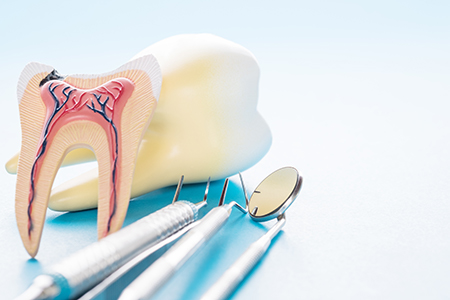
Each tooth contains an inner chamber and root canals that house the dental pulp — a network of nerves, blood vessels, and connective tissue. This tissue is essential during a tooth’s development, and it also alerts you to problems by producing sensitivity or pain. When decay, cracks, or trauma reach the pulp, inflammation and infection can follow.
Symptoms vary. Some teeth become intensely painful, while others may cause only fleeting sensitivity or no pain at all even as infection advances. A comprehensive exam and dental X-rays help reveal the extent of damage and whether the underlying tissue is compromised. Left untreated, infection can spread to the surrounding bone and create larger issues that are more difficult to address.
Root canal therapy is recommended when the pulp is irreversibly damaged or infected but enough tooth structure remains to restore and protect the tooth. In these cases, removing the diseased tissue, disinfecting the internal spaces, and sealing them preserves the tooth and reduces the risk of future complications.
Although not every ache signals a need for root canal therapy, several signs commonly indicate a deeper problem. If you notice any of the following, seek evaluation so the issue can be diagnosed and treated promptly:
Ongoing or severe tooth pain — especially pain that disturbs sleep or persists despite over-the-counter remedies — often indicates significant inflammation or infection within the tooth. This kind of discomfort warrants a timely dental exam.
Lingering soreness to hot or cold foods and beverages, particularly when the sensitivity remains after the stimulus is removed, can be a sign the pulp is irritated or damaged and may need intervention.
Discomfort on biting, chewing, or even light pressure can indicate that the internal tissues are compromised or that an infection has affected the supporting structures around the root.
A change in color — a gradual gray or darker shade — often reflects internal changes in the tooth’s tissues following trauma or chronic pulp injury and should be evaluated.
Fractures can expose the inner tooth to bacteria and lead to pulp involvement. Even small chips that reach the dentin may put a tooth at higher risk of needing treatment later.
Swelling of the gums or a recurring pimple-like bump on the gum near a tooth can indicate an abscess — a sign that an infection is present and needs prompt attention.
In advanced cases, infection can harm the bone support around a tooth and cause mobility. Timely treatment often leads to resolution of inflammation and recovery of function.

Delaying treatment can allow infection to progress, increasing the complexity and the scope of care needed later. What begins as localized pulp inflammation can extend into the root tip and surrounding bone, sometimes requiring more extensive procedures to resolve. Early action typically keeps treatment straightforward and more predictable.
Finding a problem early often means less restoration is required after the root canal and a stronger remaining tooth structure to work with. This helps reduce the chance of fracture and improves the longevity of the restored tooth. Routine exams and X-rays can reveal issues before symptoms become severe, so consistent dental care plays an important preventive role.
When a root canal is recommended, scheduling the procedure in a timely manner protects both the tooth and your overall oral health. If you have recurring pain, swelling, or signs that something has changed with a tooth, prompt evaluation is the best way to preserve options and reduce future complications.
Root canal therapy today uses precise instruments, careful disinfection protocols, and materials designed to seal the internal spaces of the tooth reliably. Most procedures are completed under local anesthesia so patients remain comfortable and free of pain during treatment. Additional anxiety-management options are available when needed.
Depending on the tooth’s anatomy and the extent of infection, a root canal may be completed in a single visit or over two appointments. The process generally involves removing the compromised pulp, cleaning and shaping the canals, and filling them with a biocompatible material. Finally, the tooth is temporarily restored and scheduled for a permanent crown or filling to restore strength.
Following the procedure, placing a durable restoration is essential. Teeth that have undergone root canal therapy are often more brittle and benefit from crowns or onlays that protect remaining structure and restore function. Your dentist will discuss the restoration plan so the tooth is restored in a way that fits your needs and bite.
Comfort is a common concern after any dental procedure. Once the local anesthetic wears off, mild soreness around the treated tooth and surrounding gum is normal for a few days. Over-the-counter pain medication, taken as directed, typically controls discomfort. If antibiotics are prescribed to manage or prevent spread of infection, it’s important to finish the course exactly as instructed.
While a temporary filling is in place, the treated tooth is more susceptible to fracture. It’s wise to avoid hard or sticky foods and to chew on the opposite side of the mouth until a permanent restoration is placed. Maintaining excellent oral hygiene supports healing and helps prevent new problems from developing around the treated tooth.
Follow-up appointments allow us to confirm healing and place the definitive crown or restoration. With proper restoration and routine care — brushing, flossing, and regular dental visits — a tooth that has received root canal treatment can function effectively for many years, often a lifetime.
If you notice persistent or worsening pain, swelling, fever, or any unusual symptoms after treatment, contact our office for evaluation. Timely attention to post-procedure changes helps ensure the best possible recovery.
In summary, root canal therapy is a proven method for relieving dental pain and preserving natural teeth that have been injured or infected. It combines targeted treatment with restorative planning to restore function and comfort while protecting the surrounding teeth and jaw.
A-List Dental is committed to offering clear explanations, thoughtful care, and modern treatment options for patients facing endodontic needs. If you have questions about root canal therapy or want to schedule an evaluation, please contact us for more information.
A root canal is a dental procedure that removes inflamed or infected tissue from inside a tooth and seals the internal spaces to prevent reinfection. The internal tissue, called the pulp, contains nerves and blood vessels that can become damaged by decay, cracks, or trauma and lead to persistent pain or infection. Treating the tooth internally preserves the natural structure and helps maintain normal chewing function and jaw health.
Root canal therapy is performed to relieve pain, eliminate infection, and prevent the problem from spreading to surrounding bone and teeth. When a tooth is restored after treatment, it often continues to function for many years with proper care. Choosing treatment over extraction generally preserves more of your natural anatomy and simplifies long-term oral health management.
Common signs that suggest a deeper problem include persistent or severe tooth pain, lingering sensitivity to hot or cold, swelling or a pimple-like bump on the gums, and pain when biting or chewing. Some teeth may darken in color or feel loose if the supporting bone is affected, while other infected teeth produce little or no pain despite significant internal damage. Any of these symptoms merits a prompt dental evaluation to determine whether the pulp is compromised.
A dentist will evaluate symptoms, perform a clinical exam, and take dental X-rays to assess the extent of damage and detect signs of infection or bone loss. Because some infections progress without obvious symptoms, routine exams and imaging help identify problems early. Timely diagnosis typically leads to simpler, more predictable treatment and better long-term outcomes.
Modern root canal therapy begins with effective local anesthesia to ensure the patient is comfortable throughout the procedure, followed by creation of a small access opening into the tooth. The dentist or endodontist removes the diseased pulp, cleans and shapes the canal spaces using precise instruments, and disinfects the internal anatomy to reduce bacterial load. After shaping and cleaning, the canals are filled with a biocompatible sealing material and the access is closed with a temporary restoration.
Depending on the tooth's anatomy and the severity of infection, treatment may be completed in a single visit or scheduled over two appointments to allow for additional disinfection. Advanced imaging and instrumentation improve the ability to clean complex canal systems and enhance predictability. A follow-up visit is scheduled to place a permanent restoration that protects the tooth from fracture and reinfection.
Thanks to modern anesthesia and techniques, most patients experience little to no pain during the root canal procedure itself, and many report relief from the severe pain that prompted treatment. Dentists use numbing agents and, when appropriate, additional anxiety-management options to keep patients comfortable throughout the appointment. The focus on gentle technique and clear communication helps reduce stress and improve the overall experience.
After the procedure, mild soreness or sensitivity around the treated tooth and surrounding tissues is common for a few days and can usually be managed with over-the-counter pain medication taken as directed. If antibiotics are prescribed to address an active infection, it is important to complete the full course. Patients should contact the office if they experience increasing pain, swelling, fever, or other concerning symptoms so the situation can be evaluated promptly.
Recovery after a root canal typically involves a few days of mild soreness as the surrounding tissues heal and inflammation subsides. Most patients can return to normal activities the next day, with over-the-counter medication controlling discomfort in the short term. Avoiding hard or sticky foods and chewing on the opposite side of the mouth until the permanent restoration is placed helps protect the treated tooth during this vulnerable period.
Complete healing of the surrounding bone and tissues may take several weeks to months depending on the severity of the original infection and the individual's healing response. Follow-up visits are important to monitor healing and to place a definitive crown or onlay that restores strength and long-term function. Maintaining good oral hygiene and attending routine dental exams supports a durable outcome.
Many teeth that have undergone root canal therapy are more brittle and benefit from a crown or onlay to restore strength, protect remaining tooth structure, and prevent fracture. Posterior teeth in particular are subject to heavy biting forces and are often restored with crowns to ensure longevity. The extent of the remaining tooth structure and the tooth's location in the mouth help determine the most appropriate restoration.
Your dentist will discuss restoration options and timing, which typically involves placing a temporary restoration after the root canal and scheduling a permanent crown once healing is confirmed. Materials such as high-quality porcelain or ceramic provide both durability and a natural appearance. Proper restoration and bite adjustment help the treated tooth function comfortably for years.
Root canal therapy is a highly successful and commonly performed procedure, but like any treatment it carries some risks, including persistent infection, missed canals, fracture of the tooth, or continued symptoms in a small percentage of cases. Complex internal anatomy or previously undetected cracks may complicate complete disinfection, and bacteria can sometimes persist or re-enter the canal system. If problems occur, options such as retreatment or surgical procedures may be considered to address the issue.
Careful diagnosis, the use of advanced imaging and instruments, and precise technique all help minimize the chance of complications. Prompt placement of an appropriate permanent restoration after treatment reduces the risk of fracture and reinfection. Regular follow-up appointments allow the dentist to monitor healing and intervene early if additional care is needed.
Although root canal therapy succeeds in the majority of cases, failure can occur due to persistent bacteria, untreated canal branches, recurrent decay, or structural problems such as cracks that allow reinfection. If a treated tooth continues to cause symptoms or shows signs of ongoing infection, retreatment can often resolve the problem by re-cleaning and resealing the canals. In some situations, endodontic surgery (apicoectomy) is an option to address infection at the root tip.
If retreatment or surgical approaches are not viable or declineable, extraction followed by a tooth-replacement option such as a dental implant, bridge, or removable prosthesis may be considered to restore function and aesthetics. The best alternative is chosen based on the tooth's condition, the patient's overall oral health, and long-term treatment goals. A thorough consultation helps clarify the most appropriate path forward.
Immediately after treatment, avoid chewing on the treated tooth until a permanent restoration is placed and follow any instructions your dentist provides about temporary restoration care. Maintain gentle oral hygiene—brushing twice daily and flossing carefully—to keep the area clean while tissues heal, and complete any prescribed antibiotics to control active infection. If discomfort persists beyond a few days or worsens, contact the dental office for evaluation.
Long term, treat the restored tooth like any natural tooth by practicing regular brushing, flossing, and attending routine dental checkups and X-rays to monitor bone and periodontal health. A well-sealed restoration and good oral hygiene greatly reduce the risk of reinfection. Timely attention to new symptoms, such as renewed pain or swelling, helps preserve the tooth and overall oral health.
A-List Dental emphasizes patient comfort, clear communication, and modern techniques to provide predictable root canal care that relieves pain and preserves natural teeth whenever possible. The team combines up-to-date instrumentation, digital imaging, and careful restorative planning to ensure treatment is both effective and efficient. Patients receive explanations about the diagnosis, step-by-step guidance during care, and a restoration plan tailored to their needs.
The Las Vegas office focuses on creating a calm, informed experience and coordinating follow-up care so the treated tooth is protected for the long term. If you have questions about whether root canal therapy is appropriate for a specific tooth, a diagnostic visit will clarify the condition and available options. Prompt evaluation helps preserve choices and supports the best possible outcome.
Schedule your visit today and discover how easy, comfortable, and rewarding top-tier dental care can be.
